
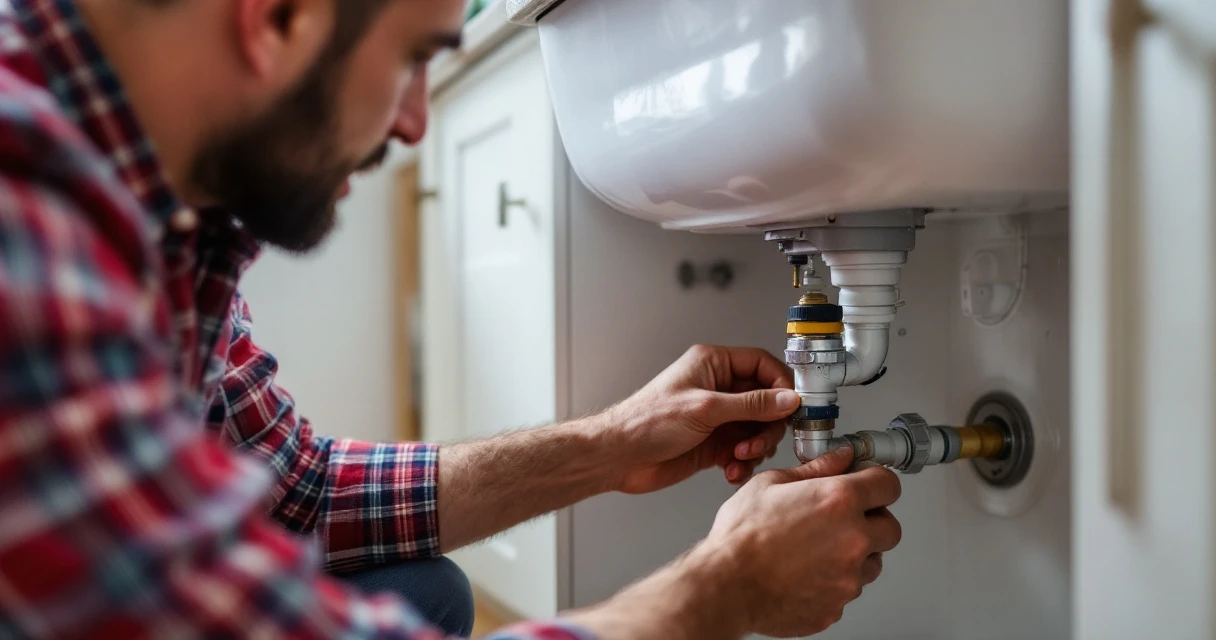
A plumbing emergency is stressful enough. In a rural Devon property — where help may take an hour or more to arrive — knowing what to do in the first ten minutes can significantly reduce the damage.
Burst Pipe
Step 1: Turn off the water. Your main stopcock is usually under the kitchen sink, in an airing cupboard, or where the water main enters the property. Turn it clockwise to stop the water. If you cannot find it, there is an external stop tap in a small chamber in the pavement or driveway outside — this can also be turned off with a stop tap key.
Step 2: Drain the system. Turn on your cold taps throughout the house to drain any water remaining in the system. This reduces pressure and the amount of water that can escape.
Step 3: If near electrics, turn off the power. A pipe burst near a consumer unit, socket, or lighting circuit is a serious hazard. Turn off the main switch at your fuse box.
Step 4: Contain the water. Put down towels and buckets. Move electronics, rugs, and other valuable items away from the water.
Step 5: Document. Take photos before you start any clean-up — you may need them for a home insurance claim.
Finding Your Stopcock: Devon Property Types
The location of your main stopcock varies significantly by property type. In Devon's older housing stock:
Victorian terraces (Tavistock, Okehampton, Launceston town centres): The stopcock is usually under the kitchen sink or in the downstairs bathroom. In some older terraced properties, it is behind a timber panel in the understairs cupboard or at floor level in the hallway near the front door.
Stone farmhouses and longhouses (Dartmoor fringe, Tamar Valley): The water main often enters through the stone floor of a utility room or scullery at the rear. The stopcock may be at a very low level, partially obscured by a fitted unit, or in a separate boiler room or dairy. Some rural properties have the stopcock in an outbuilding near the water meter.
Modern detached houses (housing estates around Tavistock): Usually under the kitchen sink, but sometimes in an underfloor void or at the side of the property in a small external housing.
If you cannot find the internal stopcock in an emergency, use the external stop tap. This is a square-ended fitting in a small plastic or metal cover set into the ground at the front of your property boundary, usually near the pavement edge. A stop tap key (available from any hardware shop for around £3) turns it — or improvise with a flat-bladed screwdriver in the slot.
Frozen Pipes: A Specific Dartmoor and West Devon Risk
Properties on the edge of Dartmoor and in exposed rural Devon locations are at greater risk of frozen pipes than urban areas. Dartmoor is statistically the coldest part of South West England. Exposed pipes in unheated outbuildings, garages, loft spaces, and external walls are particularly vulnerable during cold snaps.
Signs of a frozen pipe: No water from a tap, no flow from a shower, or a partial flow with unusual resistance. If you can hear water running (from a dripping overflow or icemaker) but nothing comes out of taps, a frozen pipe is likely.
What to do: Do not use boiling water on frozen pipes — the rapid temperature change can crack them. Use a warm (not hot) wet cloth wrapped around the pipe, or a hair dryer on its lowest heat setting. Start from the tap end and work back towards the stopcock. If the pipe is hidden in a wall or floor, this is a job for an emergency plumber.
Prevention for next winter: Lag exposed pipes in loft spaces and outbuildings before November. Maintain at least 13°C (55°F) in the property even when away. Know where your stopcock is before you need it.
Boiler Breakdown — No Heat or Hot Water
If the boiler has simply cut out, check the following before calling:
- Pressure: Most combi boilers need to be between 1 and 1.5 bar at rest. If the gauge reads below 0.5 bar, the boiler may have shut off due to low pressure. Topping up the pressure via the filling loop may restore operation temporarily.
- Thermostat: Check that the room thermostat and programmer are set correctly and that there is no battery failure.
- Gas supply: Check that other gas appliances in the property are working. If not, contact your gas supplier.
- Error code: If the boiler has a fault display, note the error code before calling us — it helps the engineer prepare for the most likely cause.
If the flame has gone out and the boiler will not relight, or if there is a smell of gas, do not attempt to relight it. Leave the property and call the Gas Emergency line (0800 111 999) immediately. Request a boiler repair once the property is declared safe.
Gas Smell
If you can smell gas: 1. Do not operate any electrical switches. 2. Open all windows and doors. 3. Leave the property immediately. 4. Call the Gas Emergency Service: 0800 111 999 (free, 24 hours). 5. Do not re-enter the property until it has been declared safe.
Blocked Drain Causing Overflow
- If a blocked drain is causing sewage or waste water to overflow inside the property, try to identify and stop the source:
- Do not flush toilets or run water into affected drains.
- If the overflow is from a ground floor toilet, check that the soil stack access point (if there is one) is not blocked.
- Keep people and pets away from sewage overflow — it is a health hazard.
What to Tell the Emergency Plumber When You Call
Having this information ready speeds up the response significantly:
- Your postcode or full address (including village name for rural Devon properties — postcodes can cover large areas)
- Whether the water is still running or has been isolated
- Where the problem is (loft, ground floor, external, etc.)
- What has already been done (stopcock turned off, power isolated, etc.)
- Whether there is any electrical risk
For Dartmoor and rural Tamar Valley properties, mention if the access road has any weight restrictions or if there is a particularly narrow section — our engineers plan their route accordingly.
What an Emergency Callout Costs
We provide a fixed price before any work starts — no surprises when the invoice arrives. Emergency call-outs attract a higher rate than planned work, which is standard practice. Typical ranges for common emergency jobs in Devon:
- Burst pipe isolation and temporary repair: £150–£250
- Emergency drain clearance (toilet blocked, sewage overflow): £130–£200
- Emergency boiler restart (fault code, frozen condensate): £100–£180
- Major leak investigation and first-fix repair: £180–£350
These figures are for the emergency attendance and first-fix only. Follow-up work (permanent pipe replacement, full drain survey) is quoted separately.
When to Call Us
All of the above situations qualify for emergency attendance. We cover the full 20-mile radius from Tavistock and aim to provide an honest estimated arrival time when you contact us. Rural properties on Dartmoor or in the Tamar Valley will have longer arrival times than town-centre addresses — we will always be upfront about this.
Request an emergency attendance online and we will confirm coverage and arrival time immediately.