
One of the most common questions we get from homeowners in Tavistock, Okehampton, and Launceston is this: if a drain blocks, who is responsible for clearing it — me or South West Water?
The answer depends on exactly where the blockage is located. Get it wrong and you could end up paying for clearance on a drain that South West Water should have fixed, or waiting for a utility company to respond when the problem is actually yours to deal with.
The Simple Rule
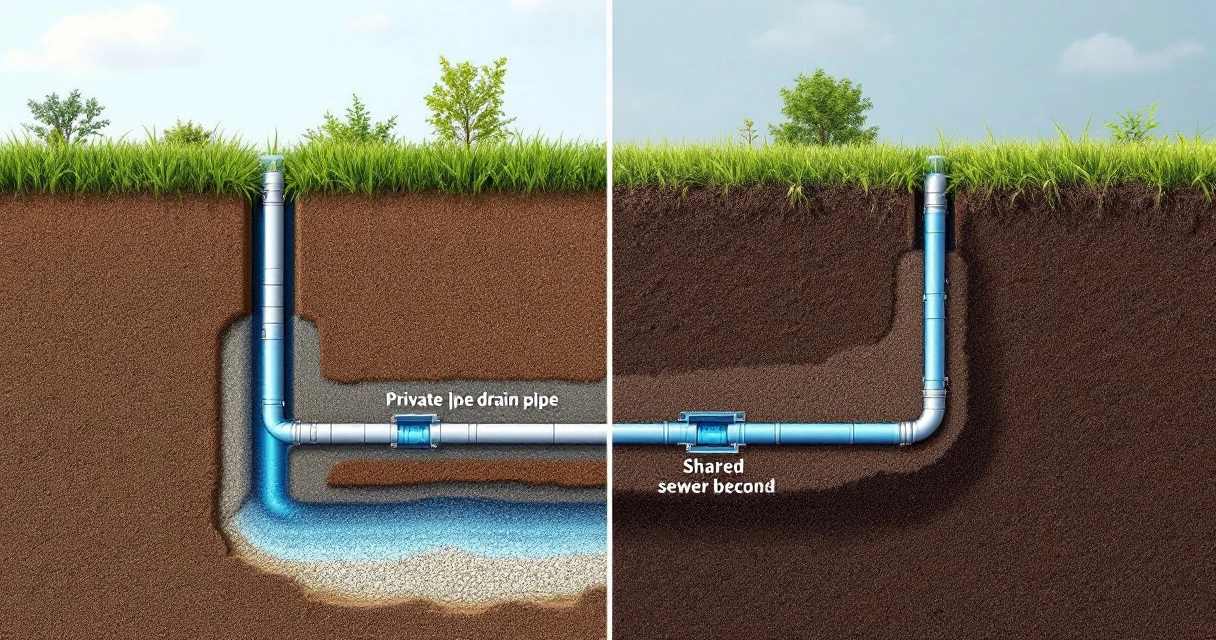
Within your property boundary: The private lateral drain — the pipe that runs from your property to the shared sewer — is your responsibility. If the blockage is within your boundary, you arrange and pay for clearance.
On the shared sewer: Since October 2011, South West Water took over responsibility for private sewers in the South West. A shared sewer is any pipe serving two or more properties. If the blockage is on a shared sewer, South West Water should deal with it.
The 2011 Transfer — What Changed for Devon Homeowners
Before October 2011, private sewer pipes serving more than one property were often the joint responsibility of the households connected to them — a confusing and frequently disputed arrangement. The Water Industry (Schemes for Adoption of Private Sewers) Regulations 2011 changed this, transferring ownership of those shared private sewers to water companies.
For Devon homeowners, this means that most shared sewer pipes running between properties and through gardens — the sections beyond your property boundary that connect to the main public sewer — are now South West Water's problem to fix. Many homeowners in older Devon properties are still unaware of this and pay for clearance on pipes that South West Water should be maintaining.
Where It Gets Complicated
In older Devon properties — particularly Victorian terraces in Tavistock, Okehampton, and Launceston — the boundary between private lateral and shared sewer is not always obvious. The drainage layout may not be documented, drainage runs may have been modified over the decades, and pipe routes in rural properties are often unknown.
The safest way to resolve this is to have a CCTV drain survey carried out. The camera shows exactly where the blockage is and helps identify whether the pipe at that point is private or shared. We carry out CCTV surveys across the full service area.
How to Check If Your Drain Is Private or Shared
A few quick checks before calling anyone:
Step 1: Look at your property. If you are in a terraced row or semi-detached house, there is almost certainly a shared drain serving your row. The section within your garden boundary is private; beyond it is likely shared.
Step 2: Check for an inspection chamber. Most properties have at least one inspection chamber (a drain cover) in the garden or driveway. If it is inside your boundary, the pipe at that point is yours. If the nearest chamber is outside your boundary — in the pavement, alleyway, or road — you may be on a shared sewer.
Step 3: Request drainage maps. South West Water can provide drainage maps for your address. These show the registered public sewers. What they do not always show is the section transferred in 2011 — those older private sewers that became SWW's responsibility. This is where it gets genuinely ambiguous.
If you are uncertain, a CCTV drain survey is the quickest and most definitive way to know.
What South West Water Will and Won't Do
South West Water will investigate and clear blockages on shared sewers they are responsible for, but response times for non-emergency callouts can be several days or longer. If a blocked drain is backing up into your property or creating a health hazard, you may decide to get it cleared privately first and then seek reimbursement — though this is not guaranteed.
- South West Water will NOT deal with:
- Blockages on your private lateral drain
- Drainage within your property (soil stacks, internal pipes)
- Soakaway or septic tank issues (these are always the property owner's responsibility)
Rural Devon Properties: Septic Tanks and Private Drainage
For properties with septic tanks or private drainage systems — common in rural Devon, particularly on Dartmoor and in the Tamar Valley — there is no shared sewer at all. All drainage maintenance is entirely the property owner's responsibility. This includes the septic tank itself, soakaway, and all drainage runs.
Septic tank drainage problems present differently from mains sewer blockages. Signs include slow drainage from all outlets simultaneously, gurgling noises from ground-floor drains, wet or soggy ground over the soakaway, and in serious cases sewage surfacing in the garden. If you are seeing any of these, the soakaway is saturated or the septic tank needs emptying — not a straightforward drain clearance job.
A property with a septic tank in an area like Dartmoor or the Tamar Valley has no South West Water involvement at all. If you are buying a rural Devon property, check the drainage type before exchange. Properties described as having a 'private drainage system' mean septic tank or cesspit — the full maintenance cost is yours.
What a CCTV Drain Survey Actually Shows
A CCTV drain survey involves pushing a waterproof camera through your drain pipes to inspect them from the inside. The engineer can see:
- The location and nature of any blockage
- Root intrusion from garden trees (very common in Devon properties with mature hedgerow trees and ashes)
- Displaced or broken joints (common in clay pipe drainage in older Devon properties)
- The pipe material and condition
- Where the pipe exits your property boundary and connects to the shared system
The survey footage is recorded, and you receive a written report showing the camera findings with a map reference for the blockage location. If the problem is within South West Water's section, the report gives you evidence to present to them.
Cost Guide: Private Drain Clearance in Devon
For a standard blocked drain within your property boundary, expect to pay in the range of £80–£180 depending on access and method. High-pressure jetting costs more than rodding but is more effective for recurring blockages and grease build-up. A CCTV survey typically costs £120–£250 and is worth doing on any recurring blockage or before buying an older property.
If the blockage is on a shared sewer, South West Water must deal with it at no cost to you. If you have it cleared privately first and then discover it was their responsibility, seeking reimbursement is possible but not automatic — you will need evidence of the blockage location.
Our Advice
If you are not sure who is responsible for a blocked drain at your Devon property, the quickest answer is usually to have the drain inspected first. We can clear the blockage, run a CCTV survey to show you exactly what is going on, and advise on liability. If it turns out to be South West Water's responsibility, we will tell you exactly what to report to them and how.
If you have a blocked drain in Tavistock, Okehampton, Launceston, or surrounding rural Devon — request a quote and we will attend same day where possible.